Streaming vs. Grinding: Which Path Actually Gets You to the Pro Scene Faster?
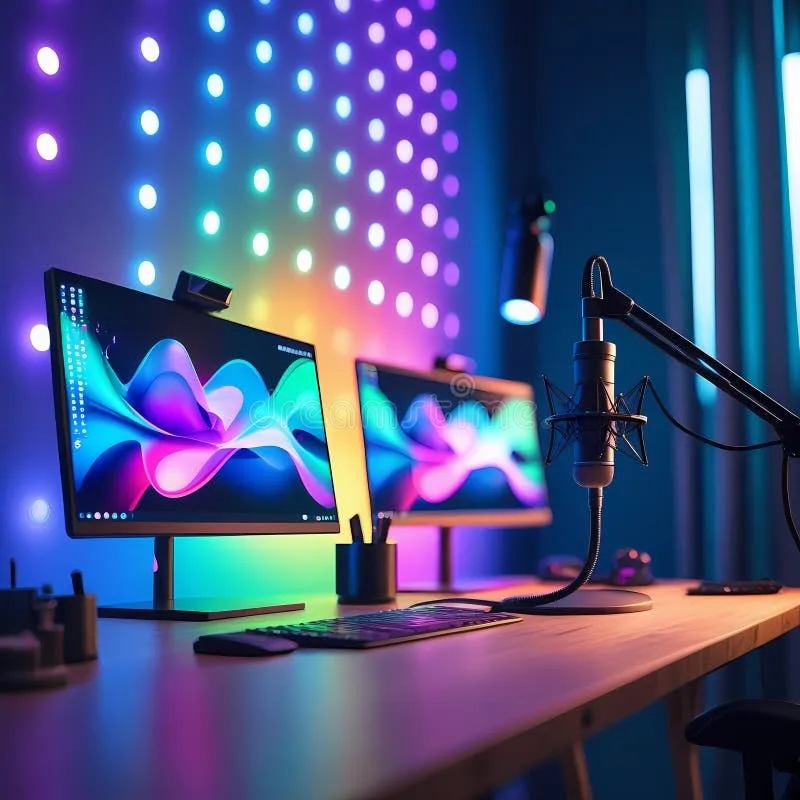
Photo: streamer gaming setup dual monitor live streaming, via thumbs.dreamstime.com
The dream looks something like this: you hit Radiant or Challenger, your stream blows up, tournament invites start rolling in, and suddenly you're competing on a stage with a team behind you. It's a path that a handful of players have actually walked — and it's made a lot of up-and-coming competitors wonder if building an audience and chasing pro play are two sides of the same coin.
Spoiler: it's way more complicated than that.
The streamer-to-pro pipeline is real, but it's narrower and more uneven than the highlight reels suggest. For every content creator who parlayed their following into a roster spot, there are dozens who found that the demands of consistent content creation quietly chipped away at the focused practice time that competitive play actually requires. And then there are the offline grinders — players no one's ever heard of — quietly climbing ranked queues and placing at regionals without a single subscriber to their name.
So which path is smarter for someone seriously chasing competitive success? Let's actually dig into it.
What the Streamer Path Gets Right
There's a legitimate argument that streaming accelerates certain competitive skills. When you're playing on camera with an audience watching, the mental pressure is real. You're performing under observation, which mimics — at least partially — the psychological environment of tournament play. Players who stream regularly often develop a thicker skin around public failure and a stronger ability to stay composed when things go sideways.
Visibility matters too. Tournament organizers, team scouts, and event coordinators spend time on Twitch and Kick. A streamer who's consistently hitting high ranks while building an audience is easier to notice than an anonymous ladder climber with no digital footprint. In a scene where networking is as important as raw skill, that visibility has real value.
Then there's the financial angle. Grinding ranked for years with zero income is a grind that most people in the US can't sustain indefinitely. Streaming creates a revenue stream that can fund the lifestyle — the gear upgrades, the tournament entry fees, the time investment — that competitive play demands. For players without organizational backing, that self-funding model is genuinely useful.
Where Streaming Starts Costing You
Here's where the math gets messy. Streaming consistently — the kind of consistency that actually grows a channel — requires a significant daily time commitment. We're talking scheduling, going live for multi-hour sessions, producing clips, engaging with communities across platforms. That's time that isn't going into VOD review, scrimmages, or the kind of deep focused practice that actually translates to mechanical and strategic improvement.
Jordan "Spectral" Hewitt, a Valorant content creator from Phoenix with a mid-size following, is candid about the tension: "I hit Diamond and kind of plateaued there for almost a year. My stream was growing, which felt great, but I was playing for content — entertaining moments, funny clips — not for improvement. When I finally tried to push into a regional qualifier, I got exposed pretty fast. My fundamentals had stagnated."
This is a pattern that shows up repeatedly. Content-oriented play and improvement-oriented play often pull in opposite directions. Streamers are incentivized to play in ways that are engaging to watch — aggressive, flashy, high-variance. Competitive improvement often requires the opposite: disciplined, methodical, low-ego practice that looks boring on camera.
There's also the mental load of audience expectations. When thousands of people are watching you perform, losses land differently. The comment section after a bad session is a psychological minefield that offline grinders simply don't have to navigate.
The Offline Grinder Advantage
Players who skip content creation entirely and just grind — obsessively, anonymously, without an audience — often build a different kind of competitive foundation. No distractions, no performance anxiety tied to viewer counts, no pressure to play for the clip. Just reps.
This is the path most traditional esports organizations have historically recruited from. Scouts for teams in leagues like the VCT Challengers circuit or regional League circuits aren't browsing streaming platforms for their next signing — they're pulling names from ranked leaderboards and watching tournament VODs.
Kelsey "KVoid" Marsh, who made the jump from unranked grinder to competing in a regional Rocket League bracket through DF999 Game's online tournament circuit, describes the advantage directly: "I never had an audience to perform for. Every loss was private. I could try weird stuff, fail, adjust, and nobody was in my chat telling me I was bad. That freedom to experiment without judgment is underrated."
The trade-off, of course, is sustainability and visibility. Grinding without income is a privilege not everyone has, and staying invisible while trying to get noticed by orgs requires placing well at tournaments — which means you need to find and enter them consistently.
Case Studies: Who Actually Made the Jump?
The most successful streamer-to-pro transitions tend to share a common trait: the player treated streaming as a secondary activity layered on top of serious competitive practice, not the other way around. TimTheTatman-style entertainment creators rarely make the transition because competitive success was never the primary goal. But players like NRG's s0m, who built a Twitch presence while competing at high levels in Valorant, used streaming as a complement to their competitive identity rather than a replacement for it.
On the grinder side, the players who break through without a content presence almost universally have one thing the streamers lack: a track record in organized competition. Tournament results are a universal language that orgs and scouts understand immediately. A first-place finish at a well-run regional event speaks louder than a thousand followers.
So Which Path Should You Choose?
Honestly? It depends on what you're actually optimizing for.
If your primary goal is competing at the highest level and you have the means to sustain a pure grind, the offline path is likely to produce faster competitive development. Put your hours into scrims, VOD review, and organized competition. Platforms like DF999 Game exist precisely to give serious players tournament reps without needing a massive following to get in the door.
If you need streaming to fund your competitive journey, or if you genuinely enjoy content creation alongside competing, the hybrid path can work — but it demands brutal honesty about your time allocation. Track how many hours you're spending on content versus deliberate practice. If the ratio is flipped, your rank will reflect it eventually.
The pipeline from streamer to pro exists. But it's not a shortcut. It's just a different route to the same destination — and it comes with its own set of tolls.