Gear That Actually Moves the Needle: A No-Hype Breakdown of Tournament-Ready Hardware in 2025
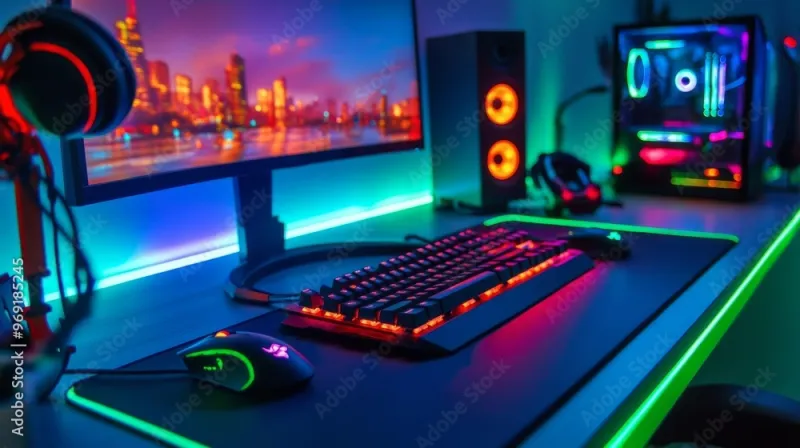
Photo: competitive gaming setup dual monitors mechanical keyboard mouse RGB, via as1.ftcdn.net
Let's get something out of the way right up front: no monitor, mouse, or mechanical keyboard is going to turn a bronze player into a champion. Anyone telling you otherwise is selling something.
That said — hardware does matter at a competitive level. The gap between a 60Hz monitor and a 240Hz monitor in a fast-paced FPS isn't marketing fluff. Input lag is real. Sensor accuracy is real. And for players who are already skilled and looking for every legitimate edge, the right equipment can be the difference between a clean read and a missed shot.
The problem is that the gaming peripheral market in 2025 is absolutely drowning in hype. RGB lighting doesn't make you faster. A $400 headset doesn't make your game sense better. And a lot of "pro-grade" gear is priced to imply performance improvements that the specs don't actually support.
So here at DF999 Game, we cut through the noise. This is a practical breakdown of what moves the needle, what's pure aesthetics, and how to build a competitive setup without blowing your whole paycheck.
Monitors: The Upgrade That Actually Pays Off
If there's one area where spending more money has a clear, documented impact on competitive performance, it's your display. And the key metric isn't resolution — it's refresh rate and response time.
For FPS titles like Counter-Strike 2, Valorant, and Call of Duty, the jump from 60Hz to 144Hz is significant and immediately noticeable. The jump from 144Hz to 240Hz is real but more incremental — meaningful at high skill levels, less critical for most players. Going beyond 240Hz (some monitors now hit 360Hz and even 500Hz) offers diminishing returns for most competitive scenarios.
Response time matters too. Look for 1ms GtG (gray-to-gray) or better. Ghosting — the visual blur that trails fast-moving objects — is a real problem on slower panels and genuinely costs you information in fast games.
What to buy in 2025: A 1080p or 1440p IPS panel at 240Hz with 1ms response time sits in the sweet spot for most competitive players. You don't need 4K for tournament play — the performance trade-offs aren't worth it. Budget around $250–$400 for a legitimate competitive monitor. Anything significantly cheaper usually cuts corners on response time or panel consistency.
What's hype: Curved ultrawide monitors look incredible but are rarely seen at LAN events for good reason. The distortion at extreme angles can actually work against you in competitive play.
Mice: Where Personal Fit Beats Price Tag
Here's the honest truth about gaming mice in 2025: the sensor technology across mid-range and high-end mice has become so good that the performance gap between a $50 mouse and a $150 mouse is genuinely minimal for most players.
What matters more than price? Shape and weight. A mouse that doesn't fit your grip style will hold you back regardless of its specs. Palm grip, claw grip, fingertip grip — each favors different form factors, and no amount of marketing copy overrides ergonomics.
For FPS games, most competitive players gravitate toward lightweight mice (under 70g) with high-precision optical sensors. The PixArt PMW-3395 and 3950 sensors, found across multiple brands, are essentially flawless at this point — they won't be your limiting factor.
For MOBA players, the calculus shifts slightly. Precision over long gaming sessions matters more than raw speed, and a slightly heavier mouse with more buttons can be an asset. Programmable side buttons for item activation or ability shortcuts are worth considering.
What to buy: Razer, Logitech, and Zowie all have competitive mice in the $50–$80 range that perform as well as their $150 flagship models in measurable testing. Spend the extra money on trying different shapes, not chasing spec sheets.
What's hype: Wireless mice have closed the latency gap significantly — modern wireless options like the Logitech G Pro X Superlight 2 perform on par with wired in competitive settings. But the "wireless = competitive disadvantage" narrative has been dead for a couple years now.
Keyboards: Switches Matter, Brand Names Don't
The mechanical keyboard market is enormous and confusing, and most of the premium pricing is driven by enthusiast aesthetics rather than competitive performance gains.
For tournament play, what actually matters is actuation consistency and key rollover. You want a keyboard that registers every input you make, doesn't ghost (fail to register simultaneous keypresses), and has switches that actuate at a consistent force and travel distance.
Linear switches (like Cherry MX Red or Speed Silver equivalents) are popular among FPS players because they actuate without a tactile bump, allowing for faster double-taps and re-presses. Tactile switches (like Browns) are more common among MOBA players who want feedback confirmation on keypresses.
For fighting game players on keyboard (hitbox-style play is increasingly common in the FPS and fighting game community), actuation speed and rollover are critical. A keyboard that can't handle simultaneous directional inputs will literally drop your inputs during frame-tight sequences.
What to buy: A tenkeyless mechanical keyboard with quality linear switches from a reputable brand runs $60–$120 and performs identically to $200+ options in competitive scenarios. Full-size keyboards take up more desk space without adding competitive value for most players.
What's hype: Per-key RGB lighting. It looks great. It does nothing for your game.
Headsets: Communication First, Audio Second
For team-based competitive play, headset quality directly affects your ability to communicate clearly — and that's where the real performance value lies. Crystal-clear mic quality matters more than surround sound processing in a tournament environment.
Virtual 7.1 surround sound is a mixed bag competitively. Some players swear by it for directional audio cues in FPS games; others find it muddies positional accuracy compared to stereo. Most pro players at LAN events run stereo.
For casual competitive grinding, a mid-range headset with a clear mic and decent stereo imaging in the $80–$130 range covers everything you actually need. If you're streaming or content creating alongside competing, a dedicated USB condenser mic paired with studio monitor headphones is a better investment than any gaming headset at any price point.
What's hype: Anything marketed primarily around "immersive audio" or cinematic sound profiles. You're competing, not watching a movie.
The Setup That Actually Wins
If you're building a competitive setup from scratch in 2025, here's the priority order based on actual performance impact:
- Monitor — Biggest measurable impact. Don't skimp here.
- Mouse — Get the right shape for your grip. Mid-range specs are fine.
- Keyboard — Consistent switches, full rollover. Brand is secondary.
- Headset/Audio — Clear mic for comms. Stereo is fine.
- Chair/Desk ergonomics — Underrated. Long-session comfort affects consistency.
The competitive edge you're looking for isn't in a single piece of gear — it's in a setup that removes friction, fits your body, and lets you perform at your ceiling without fighting your equipment.
Spend smart. Play sharp. See you in the bracket.