The Receipts: What It Really Costs to Chase an Esports Scholarship at 17
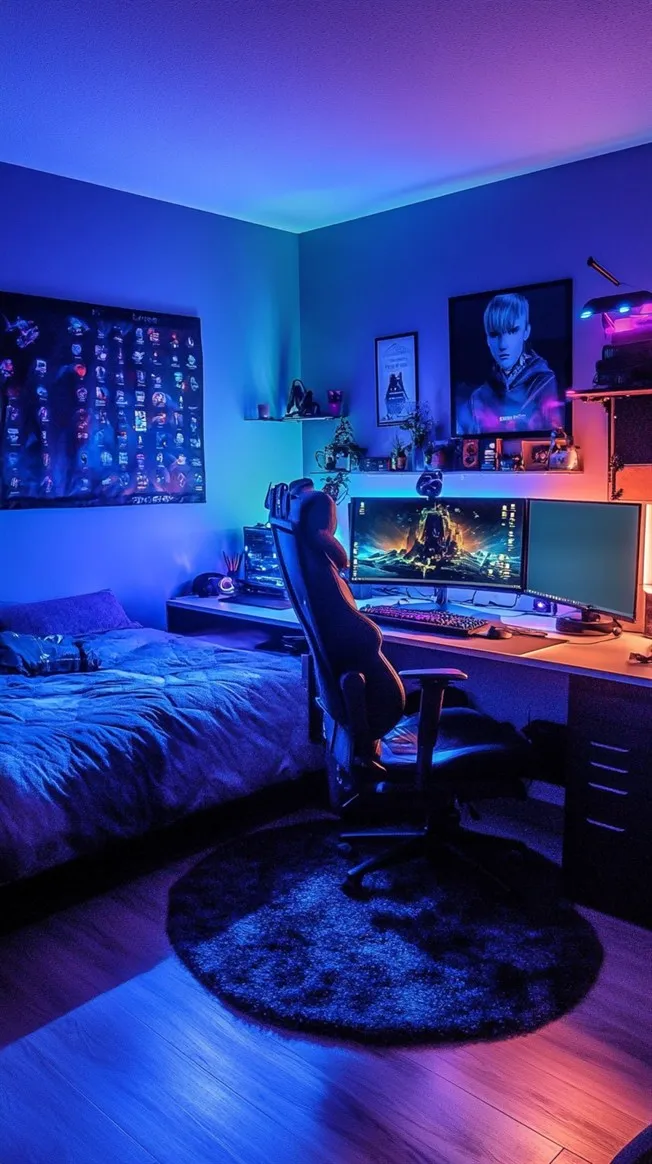
Photo: teenager gaming setup college bedroom computer, via decorwitheva.com
Esports scholarships are real, they're growing, and for the right student they can genuinely offset the cost of college. But the path toward one has a price tag that most families never see until the invoice arrives.
Let's tally it up — honestly, tier by tier.
Tier 1: The Home Grinder (Roughly $600–$1,500/year)
This is the starting point for most aspiring players, and honestly, it's further along than many parents realize.
- A capable PC or console setup: A competitive-capable rig can be built used for $700–900, or a solid console setup for less. Many families already own this.
- Peripherals: A reliable mouse, headset, and monitor with a decent refresh rate run $200–400 total.
- Game purchases and battle passes: $60–150 annually.
Budget-smart move: You don't need top-shelf gear at this stage. A used monitor and last-gen peripherals perform nearly identically for a developing player. Skills scale before hardware does.
Tier 2: Getting Serious ($2,000–$5,000/year)
Once a player sets their sights on recruitment, costs climb.
- Online coaching: $25–60 per hour. Weekly sessions run $1,300–3,000 a year.
- Team fees: Competitive amateur teams often charge $50–150 monthly for coaching and admin costs.
- Entry fees: Local and online events add $200–500.
- Upgrades: At this level, a high-refresh monitor genuinely matters — budget $300–500.
Budget-smart move: Group coaching and team-based practice deliver most of the benefit of one-on-one sessions at a fraction of the cost. VOD self-review, done consistently, is free and underrated.
Tier 3: The Travel Circuit ($6,000–$15,000/year)
This is where the pipeline gets expensive — and where families most need clear eyes.
- LAN travel: Flights or gas, hotels, and food for a single out-of-state event can hit $800–1,500 per trip. Serious circuits mean 4–8 events a year.
- Elite team placements: Invitation squads with travel included often cost $2,000–5,000 in dues.
- Showcase events: College recruiting showcases add registration and travel on top.
Budget-smart move: Regional events offer comparable scouting exposure at a third of the cost. Before booking a cross-country flight, ask college coaches directly which events they actually watch. You might be surprised how many say they review online VODs and ranked performance first.
The Other Side of the Ledger
So what's the payoff? Esports scholarships vary wildly — from partial awards of a few thousand dollars a year to substantial packages at well-funded programs. The key context: most programs recruit a small number of players per year, and many scholarships are partial, stacking on top of academic aid rather than replacing it.
Which means the smartest financial play usually isn't gaming your way to a full ride — it's pairing solid academics with competitive gaming to stack aid sources.
The Bottom Line
A full four-year run through Tiers 2 and 3 can easily exceed $30,000. That's real college money. No family should spend it blindly.
The honest advice: treat esports like any other youth pursuit. Set an annual budget, prioritize the spending that demonstrably improves recruitment odds (visibility, team play, consistent performance), and never assume the scholarship will pay back what the journey cost.
Chase the dream — just do it with the receipts in hand.