From Nobody to Notable: How Underground Gaming Tournaments Are Minting the Next Wave of Competitive Stars
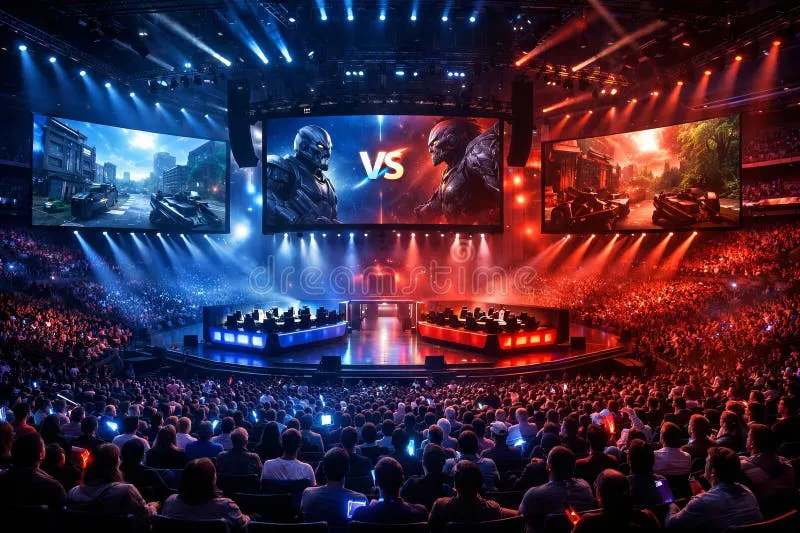
Photo: underground gaming tournament players competing at LAN event with crowd, via thumbs.dreamstime.com
Not every legend starts under a spotlight. Some of the most talked-about names in competitive gaming right now didn't come up through polished esports academies or mainstream circuit qualifiers. They started in Discord servers, local LAN setups in strip-mall gaming cafes, and bracket-style online tournaments that most casual fans have never heard of.
That's the underground scene — and in 2024, it's bigger, more organized, and more talent-rich than it's ever been.
The Quiet Revolution Happening Outside the Main Stage
For years, the conventional path into competitive gaming looked like a single narrow road: build a following, get picked up by a team, grind through official circuits, maybe land a spot at a major. That pipeline still exists, but it's not the only one anymore.
Grassroots tournaments — both in-person and online — have exploded across the US over the past few years. Platforms like Battlefy, start.gg, and Challonge host thousands of community-run competitions every month across titles ranging from Street Fighter 6 and Rocket League to Apex Legends and Smash Bros. Entry fees are often low or nonexistent. Prize pools vary wildly — some are bragging rights only, others push into the thousands. But the real currency being exchanged isn't always cash. It's visibility, reputation, and experience.
This is where raw talent gets discovered. Where a 19-year-old in Ohio who's been grinding in anonymity suddenly runs a bracket and makes the entire competitive community pay attention.
Real Players, Real Stories
The underdog narrative isn't just a feel-good framework. It's happening constantly, right now, across the competitive gaming landscape.
Take the Smash Bros. community as one of the clearest examples. The grassroots scene — built almost entirely outside of official Nintendo support for years — has consistently produced world-class players who earned their stripes at regional weeklies and monthly tournaments before anyone outside their local scene knew their names. Players like Leffen and Hungrybox didn't just appear at majors. They climbed through a community-built ladder that rewarded consistency and grit over hype.
Similar patterns are emerging in other titles. Valorant's ranked-to-pro pipeline has seen players go from unsponsored grinders to VCT-level competitors after performing in third-party online tournaments that caught the eye of scouts and team managers. In fighting games, regional scenes in cities like Chicago, Atlanta, and Los Angeles are feeding talent directly into national conversation.
The common thread? These players showed up, competed hard in whatever space was available to them, and let their performance do the talking.
Where US Gamers Can Actually Find These Competitions
So where do you start? If you're a dedicated player looking to test yourself beyond ranked queues and public lobbies, here's a practical breakdown of where the underground action lives.
Online Bracket Platforms Start.gg (formerly Smash.gg) remains one of the most robust platforms for finding and entering online tournaments across a huge variety of titles. You can filter by game, region, skill level, and prize type. New events go up constantly, and many are community-run with zero entry barriers.
Battlefy is another solid option, particularly popular for team-based games. Challonge offers simple bracket creation and is widely used for smaller community events.
Game-Specific Discord Communities This is where a lot of the real action gets organized. Almost every major competitive title has a network of Discord servers — both official and community-run — where tournament organizers post brackets, recruit players, and announce events. If you're serious about a specific game, finding and joining its competitive Discord ecosystem should be your first move.
Local Gaming Cafes and LAN Events Don't sleep on in-person competition. Gaming cafes across the US host regular tournaments, and local FGC (Fighting Game Community) events are especially active in major metro areas. Websites like Smash Bros. regional wikis or Facebook community groups often list upcoming local events. The in-person experience also builds something online competition can't fully replicate: presence, composure under pressure, and real human competition.
Reddit and Community Forums Subreddits for specific games frequently post tournament announcements, and platforms like Reddit's r/esports or game-specific communities often surface grassroots events that don't get mainstream coverage.
What Makes the Underground Scene Different — And Why That Matters
There's something about grassroots competition that strips away the noise and gets to the core of what competitive gaming is supposed to be. No production budget. No broadcast deal. Just players who want to win, organized by community members who care enough to make it happen.
The stakes feel different, too. When you enter a grassroots bracket, you're often playing against people who are just as hungry as you are — not necessarily the most polished, but deeply motivated. That kind of competition sharpens your game in ways ranked queues simply don't. You're forced to adapt, communicate (in team formats), and perform when it matters.
For players at DF999 Game who are serious about leveling up their competitive experience, underground tournaments represent one of the most underutilized paths available. The barrier to entry is low. The learning curve is steep. And the potential upside — in terms of skill development, community reputation, and yes, sometimes prize money — is real.
How to Approach Your First Tournament
If you've never competed in an organized bracket before, the first one can feel intimidating. Here's a quick-start mindset:
Enter with a learning goal, not just a winning goal. Your first few tournaments are data-collection exercises. You'll find gaps in your game you didn't know existed. That's the point.
Record your matches if possible. VOD review is one of the most powerful tools available to competitive players, and tournament play gives you high-stakes footage to analyze.
Connect with other competitors. The grassroots scene runs on community. Introduce yourself. Ask questions. The players who've been competing longest are often surprisingly willing to give advice to newer entrants.
Show up consistently. One tournament tells you almost nothing. Ten tournaments start to show you who you actually are as a competitor.
The next wave of competitive gaming legends is already out there, grinding in brackets most people haven't heard of yet. The question is whether you're going to be watching — or competing alongside them.
