Stomped Before You Started: How Smurf Accounts Are Quietly Killing Competitive Gaming
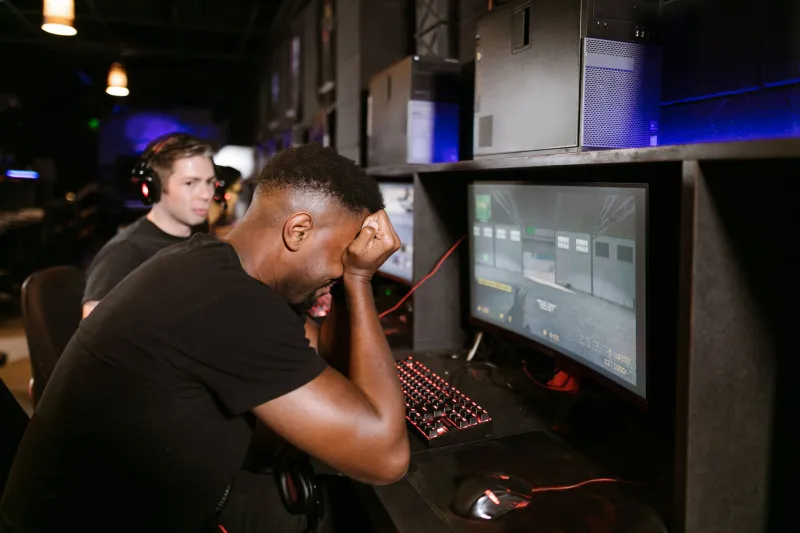
Picture this: You're a couple weeks into your ranked grind on your favorite competitive shooter. You're improving, your mechanics are clicking, and you're finally starting to feel like you belong in your bracket. Then one game happens. Some player with a fresh account and zero profile history shows up and single-handedly dismantles your entire team. Perfect aim. Perfect rotations. Zero hesitation. You check their profile — Level 12, no match history, no linked socials. Classic smurf.
This isn't a rare experience anymore. It's Tuesday. It's every Tuesday.
Smurfing — the act of a high-skilled player creating or purchasing a secondary account to play in lower-ranking lobbies — has quietly metastasized into one of the most damaging problems in competitive gaming. And while it might seem like a niche complaint from salty players, the data and community feedback tell a much darker story about what's actually happening to ranked ecosystems across the board.
What's Actually Driving Smurfs Into Your Lobby
Let's be real: smurfing isn't always malicious in intent, even when the impact absolutely is. The motivations are all over the map.
Some high-ranked players smurf because they're burned out from the pressure of their main account. Playing at Diamond or Grandmaster level means every game is a war of attrition — constant scrutiny, toxic teammates, and crushing stakes. A fresh account feels like a pressure valve. Others do it to play with lower-ranked friends without pulling them into lobbies they're not ready for. A small slice genuinely believes they're helping lower-ranked players improve by exposing them to superior play.
And then there's the segment that's just in it for the ego rush. Stomping beginners when you're a seasoned veteran isn't skill expression — it's the competitive gaming equivalent of showing up to a middle school pickup game in your college varsity jersey. The dopamine hit is real, but it comes at someone else's expense every single time.
Beyond personal motivations, there's also a thriving black market for pre-ranked "smurf accounts" — accounts that have been artificially boosted to a specific tier and then sold. This turns smurfing from an individual bad habit into an organized ecosystem that directly profits from undermining matchmaking integrity.
The Real Damage: Retention, Frustration, and Broken Trust
Here's where this stops being an abstract fairness debate and becomes a genuine crisis for the competitive gaming industry.
New player retention is already one of the hardest problems any live-service game faces. The learning curve in competitive titles is steep, and the window where a new player decides whether to stick around or bounce is narrow. Getting stomped by a smurf in that critical window doesn't just lose one match — it can permanently sour someone on an entire game.
Community sentiment data from major titles like Valorant, League of Legends, and Overwatch 2 consistently shows that smurf encounters rank among the top reasons players cite for leaving ranked modes or quitting the game entirely. When your ranked ladder is supposed to be a meritocracy — a place where you earn your spot and compete against peers — and it turns out to be riddled with ringers in disguise, the entire premise collapses. Why grind if the system is broken?
The damage extends beyond individual players, too. Tournament organizers and community league admins at every level — from grassroots circuits to mid-tier open qualifiers — deal with smurf-related disputes constantly. At DF999 Game, we've seen it come up in community discussions around open bracket integrity more times than we can count. It's a structural problem, not just a player behavior problem.
Why Developers Keep Dropping the Ball
Game developers aren't oblivious to smurfing. Most major studios have acknowledged it publicly. The problem is that the solutions they've deployed so far are either too soft or too easily circumvented.
Phone number verification was supposed to be a meaningful barrier — link one account per number, limit smurf creation. Smurfs just use burner numbers or VoIP services. IP bans are similarly porous in the era of VPNs. Accelerated MMR placement for new accounts that perform above their bracket is a step in the right direction, but it still takes too many games to correct course when the system is being actively gamed.
The hesitation from developers is understandable from a business angle. Banning or restricting accounts too aggressively risks catching legitimate new players, returning players, or people who play on multiple regional accounts for valid reasons. Nobody wants to nuke their own player base trying to solve a smurfing problem. But that caution has tipped into paralysis for too many studios.
Concrete Solutions That Could Actually Work
The good news is that the tools to fight smurfing more effectively already exist — they just need to be deployed with more commitment.
Behavioral fingerprinting is one of the most promising approaches. Rather than relying solely on account age or rank, developers can analyze in-game behavior patterns — movement precision, reaction timing, decision-making complexity — and flag accounts that perform statistically far above their current MMR bracket. This isn't foolproof, but it creates a much higher baseline for detection that's harder to fake over an extended sample size.
Hardware-linked identity systems offer another layer. Tying accounts to device identifiers (with appropriate privacy disclosures) makes creating truly anonymous smurf accounts significantly harder, even when players cycle through email addresses and phone numbers.
Accelerated rank calibration with real consequences could reshape incentives fast. If a new account wins its first five placement matches by dominant margins, the system should fast-track it to a much higher starting rank — not just slightly above average. Pair that with automatic flags for accounts showing behavioral patterns inconsistent with their stated rank history, and smurfs lose the comfort zone they're exploiting.
Community reporting with weighted credibility is underutilized. When multiple experienced players in a lobby independently flag the same account for suspected smurfing, that signal should carry real investigative weight rather than getting lost in an automated queue.
None of these are silver bullets. Smurfers are adaptive. But a layered detection approach is meaningfully harder to game than any single barrier.
The Competitive Scene Deserves Better
At the end of the day, this is a question about what competitive gaming is actually supposed to be. The whole appeal of ranked modes — the reason millions of players pour hours into climbing ladders and refining their skills — is the promise that you're competing on a level playing field. That your rank reflects your ability. That the grind means something.
Smurfing corrodes that promise from the inside. It tells newer players that the system isn't fair and never was. It tells mid-tier grinders that their progress is meaningless when someone with a throwaway account can erase it in a single session. And it tells the competitive community that developers aren't serious about protecting the integrity of the ecosystem they've built.
If the competitive gaming space — from major esports titles down to the community tournaments that fuel grassroots scenes — is going to keep growing, developers need to treat anti-smurf infrastructure with the same urgency they give to anti-cheat. Because right now, the smurfs are winning. And that's a loss for everyone who actually gives a damn about competing for real.