Fractured Focus: How the Always-On World Is Quietly Wrecking Competitive Gamers
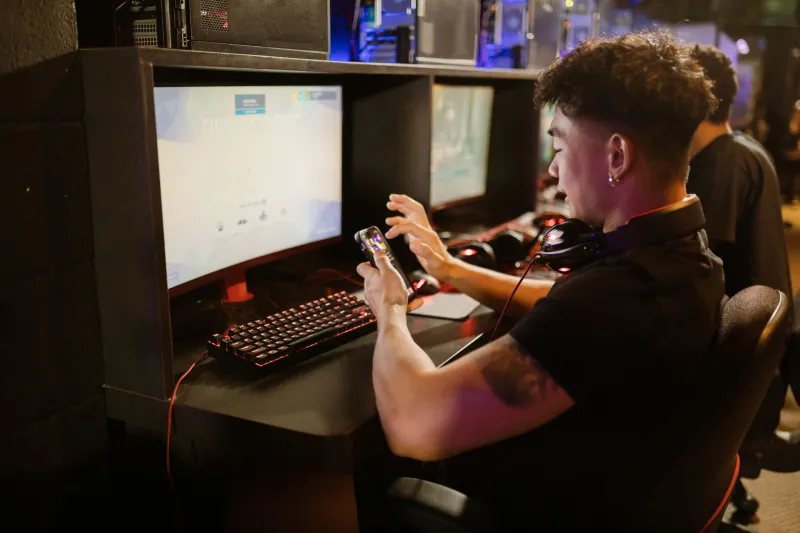
You're mid-ranked match, things are finally clicking, and then your phone lights up. A Discord notification. A Twitter reply. Maybe just your buddy sending a meme at the worst possible moment. You glance over for half a second — and that's all it takes. The fight's over before you even process what happened.
Sound familiar? You're not imagining it. And no, it's not just a "you" problem.
The reality is that the modern internet was built to steal your attention, and competitive gaming demands more of it than almost any other activity. That collision is quietly becoming one of the biggest performance killers in the game — and most players aren't even aware it's happening.
Your Brain Was Never Built for This
Here's the uncomfortable truth: human attention is a finite resource. Neuroscience has been saying this for decades, but the message keeps getting buried under the next trending thing.
Researchers at the University of California, Irvine found that after a single interruption, it takes an average of 23 minutes to fully return to a task at the same cognitive level. Twenty-three minutes. In a competitive gaming session, that's not just one bad round — that's a cascading series of miscues, mistimed reactions, and foggy decision-making that can define an entire session.
What makes it worse is something called "attention residue," a term coined by organizational psychologist Sophie Leroy. Even after you've physically put your phone down or closed that tab, part of your brain is still processing the interruption. You're technically looking at the screen, but mentally you're still halfway in that notification. Your reaction time suffers. Your spatial awareness drops. Your ability to read the game — that almost unconscious pattern recognition that separates good players from great ones — goes soft.
For casual players, this is annoying. For competitive gamers trying to climb, it's a real problem.
The Social Media Trap Nobody Talks About
There's a specific pressure that hits competitive gamers harder than most people realize: the expectation to be present online while you're trying to grind.
Streaming culture has blurred the line between performing and practicing. A lot of players feel like they need to be building their brand, engaging their audience, and posting clips — all at the same time they're trying to actually improve. That's not multitasking. That's self-sabotage with a content strategy attached.
Pro players at the highest levels have started talking about this openly. Several competitors in the FPS and battle royale space have mentioned in interviews that one of the biggest adjustments they made when going pro wasn't mechanical — it was digital hygiene. Phones in another room. Notifications fully off. Social media checked only at specific times, never during sessions.
One pro put it bluntly in a post-tournament breakdown: "I used to think staying online kept me sharp. Turns out it was just keeping me distracted with extra steps."
The social pressure doesn't stop at content creation, either. There's a constant ambient noise of takes, tier lists, drama, and community discourse that competitive players feel obligated to stay on top of. Some of it's useful. Most of it is just noise that occupies mental bandwidth you need elsewhere.
What Deep Focus Actually Looks Like in Gaming
Here's what gets lost in the distraction conversation: focus isn't just about blocking things out. It's about building the mental conditions where high-level performance becomes possible.
Psychologist Mihaly Csikszentmihalyi's concept of "flow" — that state of frictionless, fully immersed performance — is something competitive gamers know intimately, even if they don't call it that. It's when the game slows down, decisions feel automatic, and your mechanics just work. Flow is where your best play lives.
But flow has a prerequisite: uninterrupted attention over a sustained period. You can't drop into flow if you're checking your phone every eight minutes. You can't sustain it if half your mental energy is monitoring your Twitch chat. The constant micro-interruptions of modern digital life don't just disrupt focus — they make deep focus structurally harder to achieve over time.
Some researchers are even raising the question of whether repeated distraction training — which is essentially what heavy social media use does — is gradually degrading our capacity for sustained concentration. The evidence isn't fully settled, but the directional signal is not great.
Anti-Distraction Protocols That Actually Work
The good news: this is fixable. And you don't need to go off-grid to do it.
Set hard session windows. Decide before you sit down how long you're playing and treat that time as protected. No checking socials mid-session. No "quick" Discord check. If you need to, use app blockers like Cold Turkey or Freedom to make it structural rather than willpower-dependent.
Phone goes in another room. This sounds extreme until you try it. The mere presence of a smartphone on your desk — even face down, even silent — has been shown in studies to reduce available cognitive capacity. Out of sight genuinely means out of mind in a way that matters.
Warm up intentionally. The first 10-15 minutes of a session should be treated as a mental ramp-up, not a cold start. Aim trainers, mechanical drills, or low-stakes matches let your brain shift gears properly before you're in situations that demand full performance.
Audit your content consumption. Not all gaming media is created equal. Watching VODs of your own gameplay or studying pro matches is mentally active and useful. Doom-scrolling Twitter discourse about patch notes is not. Be intentional about which one you're doing and when.
Build recovery time into your schedule. Attention is like a muscle — it fatigues. Competitive players who try to grind for five-hour sessions without breaks aren't being more dedicated; they're playing most of that session at degraded capacity. Structured breaks (actual breaks, not "take out my phone" breaks) help restore cognitive resources.
The Competitive Edge You're Leaving on the Table
Here's the thing about distraction culture: because it's universal, beating it is a genuine differentiator.
If the average player in your bracket is operating at 70% cognitive capacity because they're half-plugged into five different feeds, showing up with genuine, sustained focus is like playing with a stat buff nobody else has. The ceiling on your mechanical skill doesn't change. But the consistency with which you perform at that ceiling goes up significantly.
The players who are winning tournaments, climbing ladders, and building reputations at DF999 Game aren't necessarily the ones with the most raw talent. Plenty of gifted players are spinning their wheels because they can't string together focused sessions long enough to actually develop. The ones making moves are the ones who figured out that attention is the resource — and they stopped giving it away for free.
The game is always going to demand everything you've got. The question is whether you're walking in with a full tank or running on fumes before the first match even loads.